Below is a video which includes our chosen soundtrack song. It took ages trying to find a song that really fits with the film itself and was especially difficult finding a song old enough. We played through tons of classical music, such as the song from Madame Butterfly, and some jazz and ended up with this. The song itself is mainly linked to our thriller opening via lyrics. Even though at first you wouldn't expect to hear anything quite like this when watching, if you concentrate on the lyrics they tell a story which is easily related to Faye. One line in particular - "We'll take a boat to the land of dreams..." - emphasises that this is Fayes dreaming song, and the spirit which the song expresses is the life she is aiming for.
Some people immediately think the song is too happy for the film, as we found in our feedback, but it is purposely made to be ironic. So overall i am pleased with the song but it would have been good to experiment with many more or maybe more than one. Also adding diagetic together to see what kind of effects could be given.
Showing posts with label G321 Thriller Planning. Show all posts
Showing posts with label G321 Thriller Planning. Show all posts
Sunday, 29 March 2009

Friday, 27 March 2009
Audience profile
The audience for our thriller film would be young adults, at student age, 16-25. This is because of the younger cast members, and the gripping storyline. It would be certified as a 15 due to the reference to identity theft, and the violence present in the opening scene. We can conduct from our surveys would attract both genders from our audience as the majority surveyed would rather have the female lead role, which we have included. Our film is likely to appeal to students due to the action in the opening scene, yet could also appeal to those higher up on the demographic model and to older viewers, due to the reference to classic films like Alfred Hitchcock's 'Psycho'. Other films that may appeal to our audience could be those like 'Jackie Brown' - Quentin Tarantino, and several of his other films. This is because our film was inspired by his directing, with the use of location and femme-fatales.
Our film would attract an audience who enjoy tv programmes, such as The Bill, with the reference to identity theft and a murder. Our film could continue into being a Crime type thriller, a film proved to be favoured by some from our surveys.
Our film would attract an audience who enjoy tv programmes, such as The Bill, with the reference to identity theft and a murder. Our film could continue into being a Crime type thriller, a film proved to be favoured by some from our surveys.
Femmes Fatales
Femmes Fatales are female characters, who main characters often fall in love with, but later find out they aren't who they think, and lead to the downfall of the main characters. In the end of a film, a femme fatale is often either tamed, turned out to be good after all, or killed off.
"A femme fatale is an alluring and seductive woman whose charms ensnare her lovers in bonds of irresistible desire, often leading them into compromising, dangerous, and deadly situations. She is an archetypal character of literature and art. Her ability to entrance and hypnotize her male victim was in the earliest stories seen as being literally supernatural, hence the most prosaic femme fatale today is still described as having a power akin to an enchantress, vampire, female monster or demon.
The phrase is French for "deadly woman". A femme fatale tries to achieve her hidden purpose by using feminine wiles such as beauty, charm, and sexual allure. Typically, she is exceptionally well-endowed with these qualities. In some situations, she uses lying or coercion rather than charm. She may also be (or imply to be) a victim, caught in a situation from which she cannot escape; The Lady from Shanghai (a 1948 film noir) giving one such example. Her characteristic weapon, if needed, is frequently poison, which also serves as a metaphor for her charms.
Although typically villainous, femmes fatales have also appeared as antiheroines in some stories, and some even repent and become heroines by the end of the tale. In social life, the femme fatale tortures her lover in an asymmetrical relationship, denying confirmation of her affection. She usually drives him to the point of obsession and exhaustion so that he is incapable of making rational decisions."
Examples of Femmes Fatales
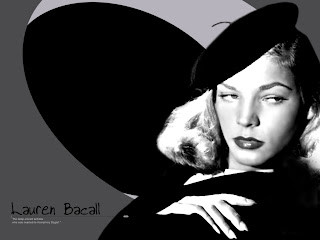
This is Lauren Bacall. She was a femme fatale in 'The Big Sleep'

This is Greta Garbo - best known for her role in 'Mata Hari'.
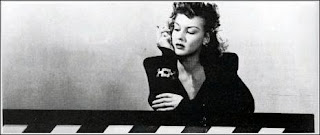
Lana Turner - Best known for her role in 'The Postman always rings twice'.
"A femme fatale is an alluring and seductive woman whose charms ensnare her lovers in bonds of irresistible desire, often leading them into compromising, dangerous, and deadly situations. She is an archetypal character of literature and art. Her ability to entrance and hypnotize her male victim was in the earliest stories seen as being literally supernatural, hence the most prosaic femme fatale today is still described as having a power akin to an enchantress, vampire, female monster or demon.
The phrase is French for "deadly woman". A femme fatale tries to achieve her hidden purpose by using feminine wiles such as beauty, charm, and sexual allure. Typically, she is exceptionally well-endowed with these qualities. In some situations, she uses lying or coercion rather than charm. She may also be (or imply to be) a victim, caught in a situation from which she cannot escape; The Lady from Shanghai (a 1948 film noir) giving one such example. Her characteristic weapon, if needed, is frequently poison, which also serves as a metaphor for her charms.
Although typically villainous, femmes fatales have also appeared as antiheroines in some stories, and some even repent and become heroines by the end of the tale. In social life, the femme fatale tortures her lover in an asymmetrical relationship, denying confirmation of her affection. She usually drives him to the point of obsession and exhaustion so that he is incapable of making rational decisions."
Examples of Femmes Fatales

This is Lauren Bacall. She was a femme fatale in 'The Big Sleep'

This is Greta Garbo - best known for her role in 'Mata Hari'.

Lana Turner - Best known for her role in 'The Postman always rings twice'.
Wednesday, 11 February 2009
The Third Man
There is strong focus on lighting, sound and camera angles.
The opening scene starts with non-diagetic sound, a voiceover. There is a medium close-up, tilt shot of the open suitcase which shows that things aren't quite how they should be.
The next shot we saw was a close up of the black market which shows the viewers of the unglamorous location. This is all in noir lighting. The audience then see a body in the river and a sinking boat, which shows that the city is dangerous.
We are then introduced to the main character, Holly Martons, who is dressed in generic thriller costume - a trilby hat and suits.
Non-ambient lighting as he walks up the stairs to Harry Limes apartment. His shadow is on the wall. This adds a sense of mystery to the mise-en-scene.
There is juxtaposition in this scene as there is cheery music against the dull and dreary mise-en-scene.
There are no subtitles for what the German caretaker is saying. This helps us to feel like we are in the same position as Martons.
At the funeral, there is Harry Limes' mistress, a femme fatale, which is generic for a thriller.

The next scene shown to us in class included the iconic introduction of Harry Lime in the doorway. He is standing in shadow, but with a cat by his feet. This is ironic as a cat is generally friendly, contrasting with the suspicious Harry Lime. This is a tilt low angle shot of the empty Vienna streets which makes the city look small and vulnerable, as if the city in coming down on top of Martons. The noir lighting in this scene adds to the sense of nightmare which is also generic in a thriller. The tilt shot also emphasises Martons disorientation.

The opening scene starts with non-diagetic sound, a voiceover. There is a medium close-up, tilt shot of the open suitcase which shows that things aren't quite how they should be.
The next shot we saw was a close up of the black market which shows the viewers of the unglamorous location. This is all in noir lighting. The audience then see a body in the river and a sinking boat, which shows that the city is dangerous.
We are then introduced to the main character, Holly Martons, who is dressed in generic thriller costume - a trilby hat and suits.
Non-ambient lighting as he walks up the stairs to Harry Limes apartment. His shadow is on the wall. This adds a sense of mystery to the mise-en-scene.
There is juxtaposition in this scene as there is cheery music against the dull and dreary mise-en-scene.
There are no subtitles for what the German caretaker is saying. This helps us to feel like we are in the same position as Martons.
At the funeral, there is Harry Limes' mistress, a femme fatale, which is generic for a thriller.

The next scene shown to us in class included the iconic introduction of Harry Lime in the doorway. He is standing in shadow, but with a cat by his feet. This is ironic as a cat is generally friendly, contrasting with the suspicious Harry Lime. This is a tilt low angle shot of the empty Vienna streets which makes the city look small and vulnerable, as if the city in coming down on top of Martons. The noir lighting in this scene adds to the sense of nightmare which is also generic in a thriller. The tilt shot also emphasises Martons disorientation.

Kill Bill volume 2
Here are some notes I made when watching the opening of Kill Bill Volume 2.
How does Tarantino use thriller signifiers in this action adventure, martial arts film?
The Brides Burial
Tarantino uses two intertextual references to Hitchcock’s 'Psycho' (1960)
Reference 1 - The soundtrack
Reference 2 - Close up of the bride driving her car - refers to Marion Crane leaving town with the stolen money.
Why?
To intensify the suspense To indicate the bride's danger To flatter the audience - like a tribute to Hitchcock. The scene includes a lot of generic thriller conventions. The scene is set in an unglamorous, isolated location at night time - noir lighting. This makes the scene shadowy. The camera is at a low angle, meaning that the viewers are seeing things from the bride’s point of view. This also makes Bill's brother look more superior.

In the scene where she is trapped in a coffin, there is diagetic sound, of nails being hammered and of the bride's heavy breathing.
Non diagetic sound added in edit. Intertextually referancing Morriconi's music in Leoni's "the Good the Bad and the Ugly"
The coffin is a powerful utilisation of genre to heighten the sense of doom and claustrophobia.
Noir lighting with chiaroscuro lighting gives the impression of impending doom, nightmare and illusion.
camera is close up, at the same level as her. we feel like we are in the same situation as her.

How does Tarantino use thriller signifiers in this action adventure, martial arts film?
The Brides Burial
Tarantino uses two intertextual references to Hitchcock’s 'Psycho' (1960)
Reference 1 - The soundtrack
Reference 2 - Close up of the bride driving her car - refers to Marion Crane leaving town with the stolen money.
Why?
To intensify the suspense To indicate the bride's danger To flatter the audience - like a tribute to Hitchcock. The scene includes a lot of generic thriller conventions. The scene is set in an unglamorous, isolated location at night time - noir lighting. This makes the scene shadowy. The camera is at a low angle, meaning that the viewers are seeing things from the bride’s point of view. This also makes Bill's brother look more superior.

In the scene where she is trapped in a coffin, there is diagetic sound, of nails being hammered and of the bride's heavy breathing.
Non diagetic sound added in edit. Intertextually referancing Morriconi's music in Leoni's "the Good the Bad and the Ugly"
The coffin is a powerful utilisation of genre to heighten the sense of doom and claustrophobia.
Noir lighting with chiaroscuro lighting gives the impression of impending doom, nightmare and illusion.
camera is close up, at the same level as her. we feel like we are in the same situation as her.

Psycho
The basic plot for Psycho, or as much of it as I've seen, is that Marion Crane has stolen money from her boss, is running away, and stays at a motel. In this motel she meets Norman Bates, the motel owner, who lives with his mother and loves taxidermy. When showering, Marion is repeatedly stabbed and dies.
There are some amazing generic thriller aspects in this film.
Bates love taxidermy -stuffing animals - but especially birds. He thinks they look the most beautiful out of all animals. His name is Bates, and he is almost like bait, to draw people in. Crane is known as a beautiful bird, and so it is like she is the bird, taking the bait, which is soon to be stuffed. It connotes that Marion is going to have the same fate as the birds, which adds to the constant tension.
Bates even says, "You eat like a bird." Birds, like her, are passive.
At the start of the film, when Marion is still innocent, and hasn't done anything wrong, she wears white underwear. After commiting the crime, she wears black underwear. This shows how she has changed as a person, and her moral code has plunged. Shes been tempted by the money which she thinks can buy her love.
 There are frequently low angle, tilt shots of Bates, his hotel and its déco. This makes everything seem more threatening, and more surreal. They also have lit from a low angle, making the shadows bigger, more surreal and threatening.
It has a suspensive soundtrack.
Its shot in black and white, film noir, making it darker and more nightmarish
Cinema is voyeuristic - the zoom into the hotel, makes us feel as though we are watching and imposing. Bedroom window shot connotes this.
It has the deviant femme fatale.
The cheap motel is an unglamerous location - where many people cheat secretly from their wives etc.
The music mirrors a heartbeat.
Regular use of close ups - mainly of the money, Marions face and hands and car mirrors.
Almost silent, use of diagetic sound.
In our thriller, we used Psycho's idea of wrapping the money in newspaper. Also we have tried to use low lighting, to get similar distorted shadows.
There are some amazing generic thriller aspects in this film.
Bates love taxidermy -stuffing animals - but especially birds. He thinks they look the most beautiful out of all animals. His name is Bates, and he is almost like bait, to draw people in. Crane is known as a beautiful bird, and so it is like she is the bird, taking the bait, which is soon to be stuffed. It connotes that Marion is going to have the same fate as the birds, which adds to the constant tension.
Bates even says, "You eat like a bird." Birds, like her, are passive.
At the start of the film, when Marion is still innocent, and hasn't done anything wrong, she wears white underwear. After commiting the crime, she wears black underwear. This shows how she has changed as a person, and her moral code has plunged. Shes been tempted by the money which she thinks can buy her love.
 There are frequently low angle, tilt shots of Bates, his hotel and its déco. This makes everything seem more threatening, and more surreal. They also have lit from a low angle, making the shadows bigger, more surreal and threatening.
It has a suspensive soundtrack.
Its shot in black and white, film noir, making it darker and more nightmarish
Cinema is voyeuristic - the zoom into the hotel, makes us feel as though we are watching and imposing. Bedroom window shot connotes this.
It has the deviant femme fatale.
The cheap motel is an unglamerous location - where many people cheat secretly from their wives etc.
The music mirrors a heartbeat.
Regular use of close ups - mainly of the money, Marions face and hands and car mirrors.
Almost silent, use of diagetic sound.
In our thriller, we used Psycho's idea of wrapping the money in newspaper. Also we have tried to use low lighting, to get similar distorted shadows.
Sunday, 8 February 2009
Thriller Final idea

This is our final idea for the thriller film.
It shows Robert lying on the ground covered in blood. Then Faye comes along, our femme fatale, and steals his wallet with credit card and money in. She then takes it to Rose, another femme fatale, who takes the money from her and walks off. Finally, we see Robert sneaking up behind Faye and suffocating her with a plastic bag.
There are a variety of effective close ups and worm angle shots.
2nd Thriller idea


These are the storyboards for our 2nd idea.
they show the femme fatale (Adalia) seeing her boyfriend cheeting on her, in a flashback, while shes sorting out her make up. Then another flashback of maybe some knife stabbings and her boyfriend dead in her bed. She leaves the house, starts driving away in her car and sees her boyfriend alive in the back of the car.
We had started to film this, but had to reshoot after Ms Barton told us most of the shots were too dark. Though we were able to keep and use a variety of shots from it in our final idea.
Thriller story boards

I FINALLY have had access to a scanner, this is the storyboard for our first thriller idea.
I dont seem to be able to rotate this one. This shows a man getting off at a train station walking towards a public toilet and being followed, by a femme fatale. He is stabbed in the toilet.
We didnt think this was a very good idea, it was too simple and not interesting enough.
Saturday, 7 February 2009
Characters

Nicole played Faye. She was available, had the right sort of hair and clothing for the femme fatale look that we were going for, and did really well acting in our preliminary task. This is her in costume.

This is me (playing Robert) with the blood used in the thriller. Its a little more messy than in the film, as id been trying to get it off...
I played the character of Robert, who is wearing completely black clothing. This makes him seem like a darker character, and is harder to see when its so dark. I chose to play Robert as i was one of the only boys who was available on the nights we could make, and i do drama as an A level, so i (should) be pretty good.
The last character in our film is Rose who is played by Jennie Stone. She also does Drama as an A level, and we trusted she'd do a good job. She is also a femme fatale, wearing similar clothes to Nicole.
Shooting Schedule
Due to various complications, our filming group has been limited to specific filming dates. However we are two thirds of the way through completion of the shoot.
Monday 1st December
Shoot went well, more complicated than we'd originally hoped it would be, most of the shoot tackled yet re-runs needed.
Monday 8th December
Shoot went extremely well. Majority of storyboards shot.
Monday 15th December
Unfortunately due to illness, this shoot had to be cancelled. We are hoping to book out the cameras again this week, yet if they are fully booked we will have to negotiate an extension.
Monday 1st December
Shoot went well, more complicated than we'd originally hoped it would be, most of the shoot tackled yet re-runs needed.
Monday 8th December
Shoot went extremely well. Majority of storyboards shot.
Monday 15th December
Unfortunately due to illness, this shoot had to be cancelled. We are hoping to book out the cameras again this week, yet if they are fully booked we will have to negotiate an extension.
Costumes For Our Thriller

Pencil Skirt
We decided that a black pencil skirt would give a classic feel to the femme fatale image we were trying to create for the character Adalia. And being high waisted would recreate the image of the femme fatale you would originally associate with the 50's and 60's film noir thrillers.

White Shirt
We though that by teaming the black pencil skirt with a white shirt this would add to the classic femme fatale image we were trying to achieve, the white gives the illusion of innocence but with the black suggests hidden depths and a possible devious side.

High Heeled Shoes
High heeled shoes represent a confident woman and this was an image we were trying to create for Adalia.

Red Beret
The splash of red (the beret) is a reference to blood, which is why we decided to include it in the costume for our thriller film.
Wednesday, 4 February 2009


Narrative Sequence
This is how our first idea for our thriller film would have been cut.
1: Pan of Adalia sitting on bed in front of mirror. Cut to
2: Extreme close up, stationary, Adalia applying lipstick
3: Fade to black and white flashback (medium shot & pan of Rob & Faye)
4: High angle shot, Adalia walking up stairs
5: Long shot, Adalia sees Rob & Faye through door. Cut to
6: Extreme close up, stationary, Adalia applying mascara
7: Fade to flasback, medium shot and pan of Rob & Faye, focus on blood
8: Cut to high angle shot, Adalia walking down stairs
9: Medium close up, Adalia walks through door and past camera
10: Cut to close up of wine glass as Adalia picks up
11: Close up of sink as wine spilt down drain whilst taps running
12: Fade to black and white flashback, close up of knife as blood is washed off it.
13: Cut to close up of wad of money
14: Camera pans as money is rolled up in newspaper & placed inside handbag.
15: Close up of handbag
16: High angle shot Adalia walking downstairs
17: Medium close -up Adalia walking down last few stairs
18: Cut to extreme close-up, Adalia opening front door handle
19: Cut to outside, Adalia opens and slams front door
20: Camera follows Adalia down front path
21: Tilt shot Adalia walking down street
22: Cut to high angle shot, Adalia walking down ouside stairs
23: Cut to close up, Adalia's anxious face as she walks past camera
24: Low angle shot, focus on high-heeled shoes as Adalia walks past
25: Point of view shot, Adalia walks to car
26: Pan of car as Adalia steps in and slams door
27: Camera inside car, pan from Adalia's head to her opening mirror
28: Focus and zoom into mirror as Rob seen in background.
We have now changed our idea.
1: Pan of Adalia sitting on bed in front of mirror. Cut to
2: Extreme close up, stationary, Adalia applying lipstick
3: Fade to black and white flashback (medium shot & pan of Rob & Faye)
4: High angle shot, Adalia walking up stairs
5: Long shot, Adalia sees Rob & Faye through door. Cut to
6: Extreme close up, stationary, Adalia applying mascara
7: Fade to flasback, medium shot and pan of Rob & Faye, focus on blood
8: Cut to high angle shot, Adalia walking down stairs
9: Medium close up, Adalia walks through door and past camera
10: Cut to close up of wine glass as Adalia picks up
11: Close up of sink as wine spilt down drain whilst taps running
12: Fade to black and white flashback, close up of knife as blood is washed off it.
13: Cut to close up of wad of money
14: Camera pans as money is rolled up in newspaper & placed inside handbag.
15: Close up of handbag
16: High angle shot Adalia walking downstairs
17: Medium close -up Adalia walking down last few stairs
18: Cut to extreme close-up, Adalia opening front door handle
19: Cut to outside, Adalia opens and slams front door
20: Camera follows Adalia down front path
21: Tilt shot Adalia walking down street
22: Cut to high angle shot, Adalia walking down ouside stairs
23: Cut to close up, Adalia's anxious face as she walks past camera
24: Low angle shot, focus on high-heeled shoes as Adalia walks past
25: Point of view shot, Adalia walks to car
26: Pan of car as Adalia steps in and slams door
27: Camera inside car, pan from Adalia's head to her opening mirror
28: Focus and zoom into mirror as Rob seen in background.
We have now changed our idea.

The 180 Degree Rule
A basic film editing guideline that states that two characters in the same scene should always have the same left/right relationship to eachother. If the camera passes over the imaginary axis connecting the two subject, it is called crossing the line. The new shot, from the opposite side, is known as a reverse angle.
This diagram shows the 180 degree rule.
Wednesday, 3 December 2008
Props
 This is one of the first props that will be shown in the very first shot. The mise-en-scene shows our main character, Adalia, putting on her bright red lipstick. This is a signifier for our femme fatal woman as it shows sexiness and deviance and also confidence.
 This is another prop we plan to be using which will be shown in a flash back scene of Adalia washing blood off of this knife in the sink. The reason we chose to include a knife is because it is a thriller aspect as it implies violence (along with guns). It is also a reference to Psycho in the shower scene when Marion Crane is murdered.
Other prop’s we will be using is mascara for another mirror shot we will be taking, with an extreme close up on the eye. Newspaper and money for Adalia to wrap up and put in her bag with a reference to Psycho again, and also shows us that she is running away from someone/something.
Set
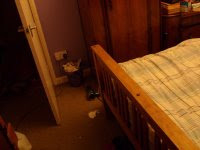
This is one of the possible locations, which will feature in our thriller film. It is a bedroom clip that is shown a couple of times to reflect betrayal and murder in flash back mode. The mise-en-scene shows a normal bedroom – every day casual. The reason we chose this bedroom is because it has available usage for filming.
When filming this there will be  hopefully be spotlighting coming from a lamp so there is a lot of shadows present which can give scary and spooky effects. If we don't use lamp spotlighting there is low light anyway which can give similar effects.
hopefully be spotlighting coming from a lamp so there is a lot of shadows present which can give scary and spooky effects. If we don't use lamp spotlighting there is low light anyway which can give similar effects. 
The third is another point of view of the same bedroom location. We have taken this picture to show a shot of the mirror as we plan to use a mirror shot of the same flashback using editing to make it quick and effective. The mise-en-scene shows a lot going on and we would centre the spot in which we were targeting to attract attention.
Subscribe to:
Posts (Atom)


